Moisture Content
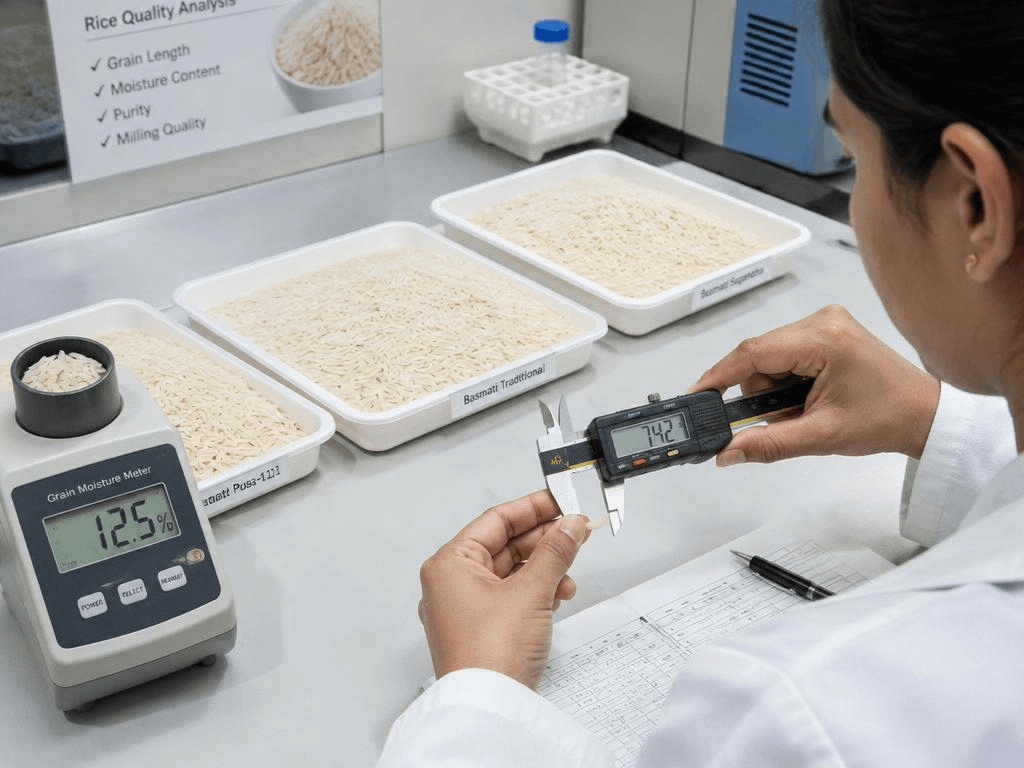
Moisture is the percentage of water in the grain. It drives storage safety, weight at shipment, and buyer acceptance. Ship too wet and you risk mold, heating, and rejection at port; too dry and you lose weight you already paid for in procurement. Most export contracts specify a narrow band — often 12–14% for white rice — and blends must hit that band consistently lot to lot.
Grain Length
Length grading separates head rice, broken percentages, and premium long-grain lines. For Basmati and long-grain parboiled programs, length is both a visual marker and a cooking-behavior predictor. Blending shorter stock into a long-grain order to “make weight” is a fast way to lose a repeat buyer when the cargo cooks differently than their specification.
Aroma
Aroma compounds in Basmati and certain specialty rices develop with age and variety. Buyers who pay for aromatic profiles can detect off-notes from mixed varieties or poorly segregated storage. A blend that dilutes aroma with neutral stock may still pass a length screen but fail the buyer’s sensory check on arrival.
Why This Matters for Blending
Export programs rarely ship a single bin as-is. Mills combine lots to meet moisture, length, broken limits, and aroma in one outbound specification. When those parameters live in spreadsheets, the “best” blend is whoever’s guess wins the day. When they live in one system tied to inventory, you optimize for margin and spec at the same time — and you can prove what went into every container.