Quality & Blending Education
Rice Quality Parameters Explained — What Moisture, Length, and Aroma Mean for Your Blend
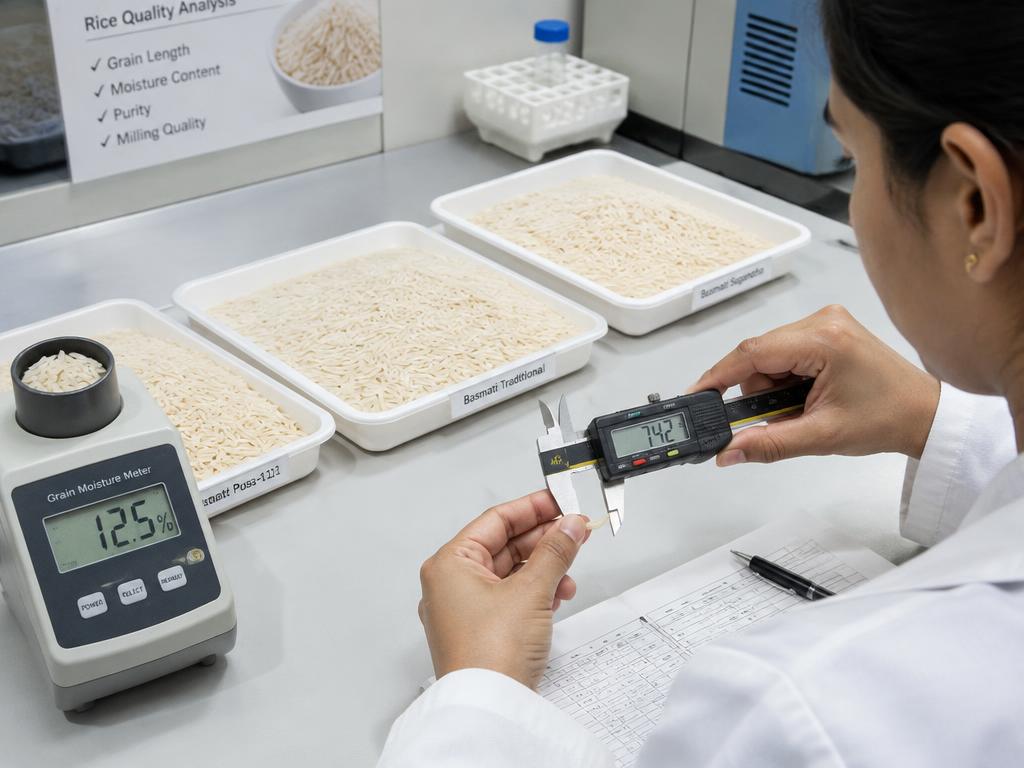
Buyer specifications for rice usually come down to three things: moisture, length, and aroma. Here's what each one actually measures, and why a blend that gets these wrong costs money twice: once in wasted stock, once in a buyer who doesn't reorder.
Moisture Content
Moisture is the first thing tested, and for good reason — it affects both storage life and shipping weight. For Basmati rice, the commonly cited optimal range is 11–13%. Moisture below that threshold is associated with proper processing and extended shelf life; above it, the risk of mold growth and insect infestation rises sharply, which is exactly the kind of loss that shows up as unexplained wastage weeks after a shipment leaves.
Grain Length
Grain length is both a visual quality marker and a cooking-behavior predictor. Basmati rice is defined by a grain length exceeding roughly 6.61 mm on average, with premium varieties reaching over 8 mm. Rice graded "extra-long grain" — typically over 7.5 mm — is considered superior quality, partly because longer grains elongate further during cooking, producing the slender, non-sticky texture buyers associate with high-grade Basmati.
Aroma
Basmati's distinctive nutty, floral scent comes from a specific aromatic compound, 2-acetyl-1-pyrroline (2-AP). Aged Basmati — typically matured 12 to 24 months — develops a more concentrated aroma than freshly milled rice, which is why aging is treated as a genuine quality lever, not just a storage byproduct.
Why This Matters for Blending
None of these parameters exist in isolation; a buyer's specification is usually a combination of all three, and the rice that best matches on moisture might not be the best match on length. This is precisely the tradeoff blending exists to solve: taking multiple lots, each strong on different parameters, and combining them to hit a buyer's exact spec rather than shipping whatever's closest from a single lot. Done by feel, this is exactly the kind of decision that varies by who's on shift. Done with the underlying quality-test data attached to every lot, it becomes a calculation instead of a guess.
Recommended Articles
Export & Compliance
The Complete Guide to Rice Export Documentation from India
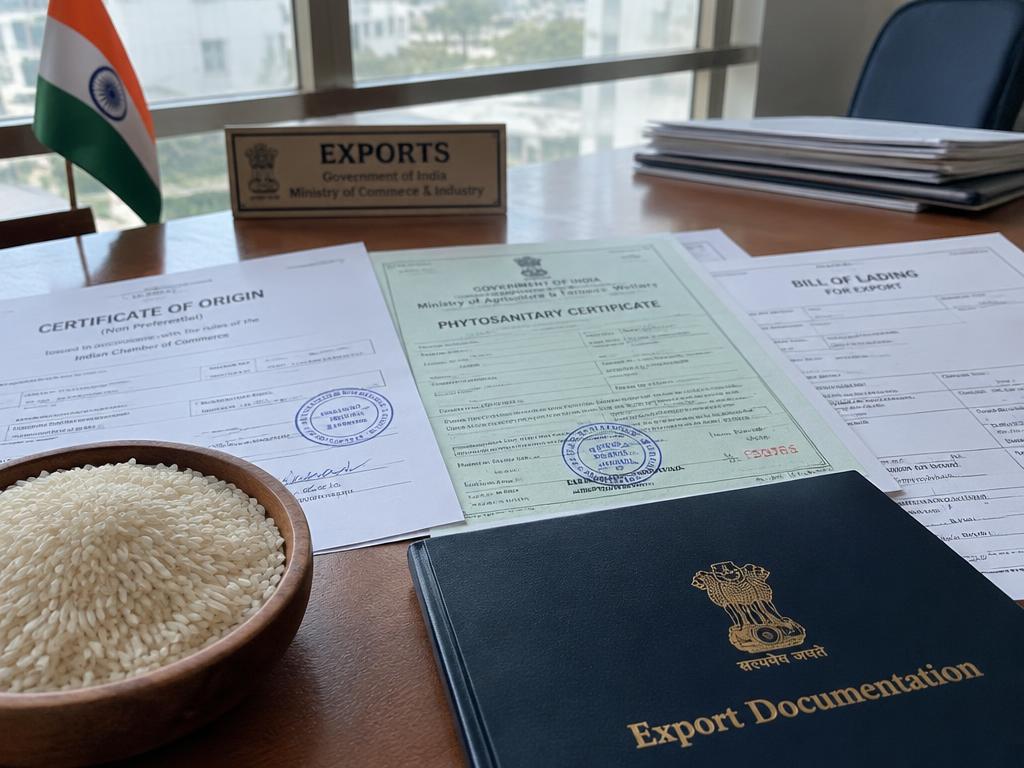
Every document you need to export rice from India — Certificate of Origin, Phytosanitary Certificate, APEDA registration, and country-specific rules.
Read more
Buyer Education
Is an ERP Worth It for a Small or Mid-Sized Rice Mill?
Weighing whether ERP software makes sense for a smaller rice mill — what it actually changes, what it costs, and when it's not yet worth it.
Read more