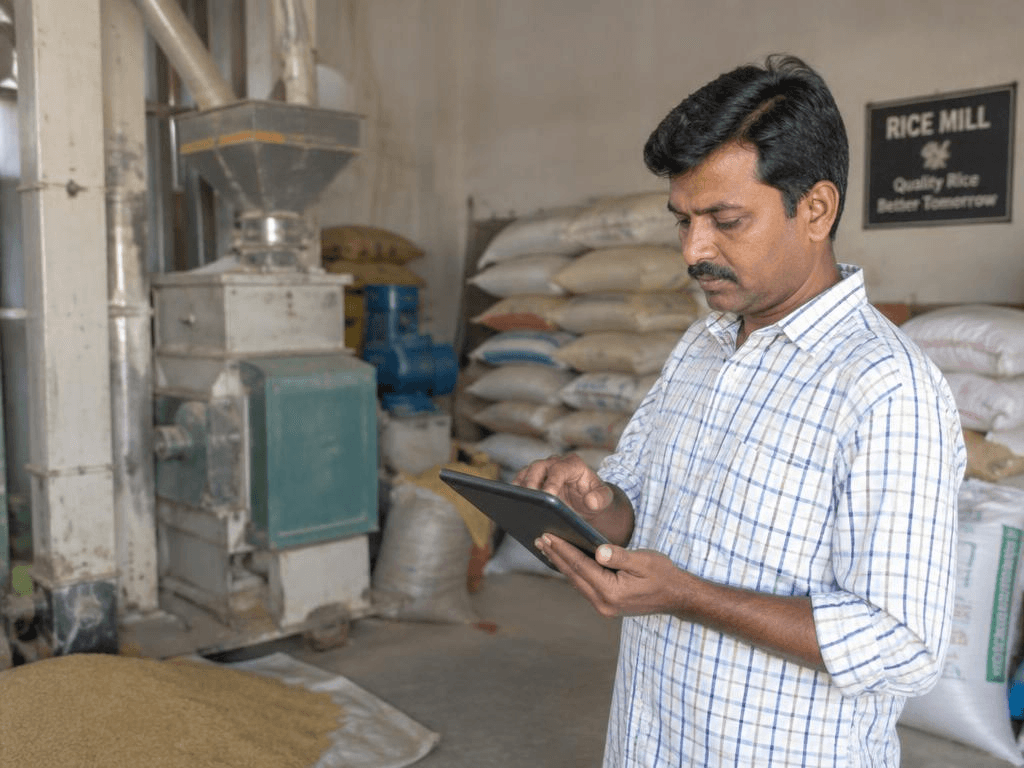
India is the second largest producer of rice in the world after China with annual rice production of nearly 130 million metric tonne and the largest exporter of Basmati outside India. However, most of the businesses involved in the procurement of paddy to dispatching it at the port operate on register books and WhatsApp thread and spreadsheet which will not be able to operate at 1/4 of the volume.
It is this gap between the scale of rice operation and the systems that run it that is where ERP system software comes in handy. This blog explains the reasons why the gap has no way of closing with traditional methods, the special characteristics of the Indian rice industry which demand modern techniques, and, most of all, exactly what will be different if a mill/exporter is upgraded.
Key Takeaways:
The need for the rice market in India and APEDA compliance are creating complexities, which can't be scaled with manual methods. The advanced ERP software for Rice Mills is an example of 5 operational gaps – “Procurement cost visibility”, “Multi-buyer spec management”, “Compliance layering”, “Working capital cycles”, and “Traceability depth”.
Rice Industry in India: Working beyond Manual Tools Capacity
The largest exporter of rice is India which exported more than 21 million metric tonnes of Basmati and non-Basmati rice in FY23-24, to dozens of countries, starting from a mandi to the farmers' field and ending at the foreign customs house. This chain of enterprises are fast emerging as growth stage companies and not big conglomerates with their own IT departments, but rather mills and exporters with a team of 20 - 100 people and a throughput of thousands of MT per month.
That scale generates operational complexity that manual tools deal with predictably bad. Knowing what order documentation will be required by whom does not have to be a luxury, nor is it the exclusive right of a highly skilled broker.The knowledge about what order documentation will be required by whom does not have to be a luxury and does not have to be the exclusive right of a very skilled broker. Being accurate or a jumble.
The food and grain industry has a routine in its working procedure, procurement – testing of quality, production – raw materials consumption, dispatch – compliance documents – these documents are not ready by the accounting/inventory software, hence the implementation of the rice industry management software becomes a necessity.
Gaps Advanced ERP in Indian Rice Industry Helps Overcome
- Compare and visualize the cost of procurement of vegetables with live mandi prices.
Indian paddy procurement is of volatile nature in terms of prices. The prices at Mandis may vary even during a week as per the moisture content at weighbridge and market rate. It is important for a rice mill to know not just the price it pays for the paddy, but the price it pays after deducting freight, moisture and quality grade differentials.
When this isn't part of an ERP system software that auto-updates the costing at the entry time of purchase, the purchase manager has to make purchasing decisions on combined information which might be 2 or 3 days old. This gives you a margin that will vary at the end of the month from what you've agreed to throughout the day.
- Multi-Buyer Specification Management
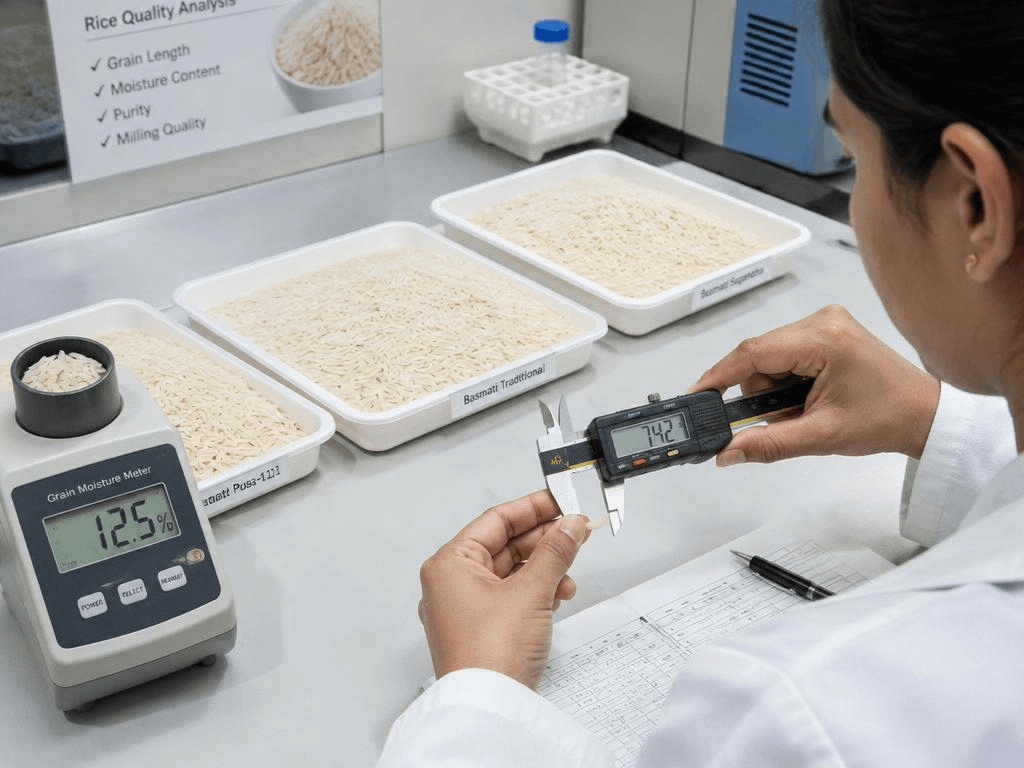
In one rice exporter's case, there are three sets of quality specs, three moisture limits, three grain length specs and perhaps three pesticide residue limits across three markets—EU, Middle East, and Southeast Asia. The blend target is different for each buyer order.
ERP software for rice mills that can store and track the rice quality parameters at lot level moisture, grain length, aroma and broken percentage can help to ensure that the right rice lot can be matched with the buyer's specification without manual cross check. If it was not there then it would be matched from memory or a separate spreadsheet that doesn't get updated when new paddy comes in.
- Keep APEDA and Export Compliance Documentation
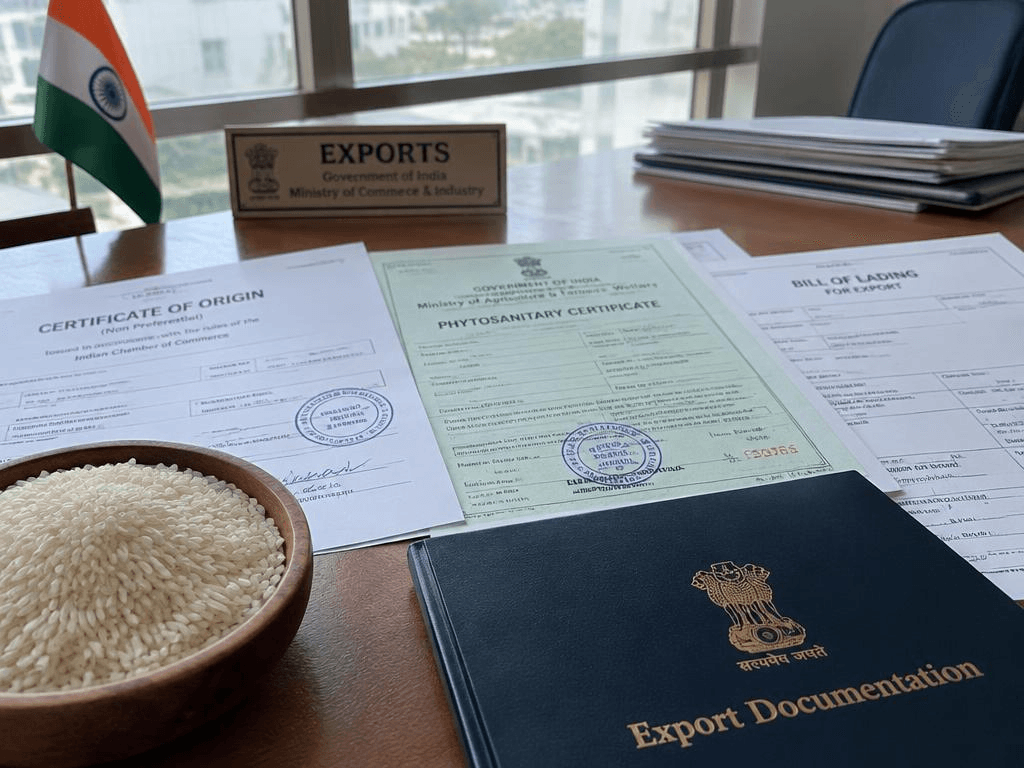
Indian rice exporters have to go through a multi-layered procedure with APEDA to e-RCMC to RCAC for Basmati and non-Basmati exports; Phytosanitary Certificates and FSSAI licensing and country-specific certificates as per destination country. All of these documents will be based on the same data that mill, which lot, which quality-test result, but all of that data has to be in a system to be pulled by demand.
Food Manufacturing ERP software for the food and grain sector serves as a linkage to these records from the source. There's no need to create a new document. No need to create a new document as ERP has records of lots, quality testing and mill registration. For exporters that are processing dozens of shipments every month that's the difference between hours and minutes of documentation time.
- Seasonal Working Capital Cycles and Inventory Cycles
In India, rice procurement is done during kharif and rabi harvest. A common pattern of high costs of procurement in October-December and in March-May, followed by processing and drawing down. The amount of paddy stored in godown during peak in procurement, bills outstanding against paddy buyer and finance outstanding against crop loans is quite high for medium scale mill business, which should be taken into account.
This is a financial cycle that can be seen with a single financial view in an ERP software solution that connects procurement, production and accounts receivable. Without it, the finance view and the operations view would be different; a business can have thousands of MTs of paddy in the stock and may not have any real-time data of the value of the stock on their books, based on the outstanding buyer commitments outstanding.
- Traceability at Shipment Level (SPS) and Buyer Audit.
The international buyers, along with the importing country regulators have tightened the rice SPS requirements for imports. Where a buyer or a government body requires pesticide residue test results for a specific shipment, the exporter shall be able to trace the shipment back from the pesticide residue test results of the lot which was used for the shipment to the paddy purchase records of the lot.
A complete audit by rice mill management software keeps a complete traceability chain of the rice from the time of paddy buying till dispatching. For exporters with manual records, the same audit is a process of piecing together documents from a variety of sources and there remains a possibility that some documents may not be found.
Why are generic tools like generic ERP not enough?
It's not just about notebooks and Excel when it comes to the need for advanced ERP software for rice exporters. Generic ERP solutions such as manufacturing or distribution don't cater to the food and grain specific requirements that are key to the success of Indian rice firms.
A paddy purchase entry is a purchase order in a generic ERP: quantity, supplier, price. In a ERP solution specifically made for rice the same entry will include the lot number, weighbridge reading, moisture and length tests at gate entry and at grade. Those parameters are carried with the lot throughout the next transaction, milling, blending, dispatch and are the ones that allow for compliance documentation, quality traceability and allocation for dispatching lots. A generic manufacturing ERP lacks all these as it is not developed with food-grade requirements for traceability.
The best ERP software in India for rice businesses is the product designed specifically for the food and grain industry and the commodity-specific workflows such as gate entry, rice milling run, handling byproducts, generation of rice challan and not for a product that is shipped in metric tonnes.
How Advanced ERP software Change Indian rice businesses
Changes that can be done in practice and that can be measured are:
- Purchase decisions go from instinctive to become data driven as cost per quintal is visible at entry not at month end.
- The quality matching for buyer orders switches from manual cross-check to suggestions of lots generated by the system.
- The documentation for export is no longer a pre-shipment scramble, but a simple look up from records.
- The finance team is replaced in access to working capital by a real-time, procurement and stock and receivables position.
Audits from a record-keeping process that takes days to complete, to a trace on a single screen.
If the Indian rice industry is given operational bedrock in the form of Rice Industry Management Software that can process these sequences as first class functions and not the painful workarounds it will have to do on a general platform, the industry can grow its volume without having to add to its burden of administration.
Frequently Asked Questions
What is ERP System Software For Rice Mills?
ERP system software for rice mills is an integrated software which includes paddy procurement, quality testing, milling, inventory, dispatch and compliance in export. The specific events and quality parameters that apply to the rice stock would determine the traceability of a particular stock lot, while the generic business software would process any stock lot, irrespective of the events and quality parameters that apply to a particular lot.
Why is ERP essential for Indian rice businesses?
Multiple aspects of price volatility in the commodities, multiple layers of compliance (APEDA, FSSAI, country-specific certificates), and capital cycles in rice markets are not explicit in generic tools at scale, which is the business of Indian rice business. Rice mills ERP software is designed specifically for the Indian food & grain industry, and not for the generic manufactured product of rice.
How does the food manufacturing ERP software differ from the generic ERP?
Food manufacturing ERP software keeps track of quality parameters and lot identities throughout the entire lifecycle of production, and establishes byproduct, dispatch and gate entry, byproduct and food safety documentation and traceability requirements for the food processing operation's specific stock events. While generic ERP systems can be utilized for purchasing orders and stock taking, they are not capable of traceability, which is a key element of compliance in the food sector when it comes to quality.
What’s the difference between the rice mill management software and the accounting software?
When it comes to accounting software, it's used to keep track of the financial transactions that have taken place. Rice mill management software when embedded with the operations can manage and record in real time, gate entry, quality test, milling run and dispatch in one system and financial records are being generated from the operation itself, thus eliminating the need to enter two different systems.
What are the functions of the ERP Software for Rice Exporters?
ERP software for rice exporters also captures all the activities of paddy procurement, inventory and quality testing, manage multiple buyers' orders with lot level allocation, generate export document software like PI / challan / packing list, and have compliance traceability linking each export shipment with the paddy lot to which it belongs and the quality test.
Conclusion
As India is the leading exporter of rice, this creates operations requirements which manual tools and general software are not able to cater to, at scale. The above five gaps are specific to the Indian rice scenario and hence ERP system software for food and grain industry is not a luxury good for growth stage mills and exporters. It's what one must do in that environment of operations management.
Request a demo and witness AgroBrain rice industry ERP in action.